A structured library for scientific and public documents
- Scientific papers and case reports
- Indian Rock Python radio telemetry research
- Snake surgery and reptile medicine documentation
- Wildlife disease, toxicology, and necropsy records
- Conference presentations and guest lectures
- Newspaper articles and television interviews
- Wildlife awareness and training programmes
- Professional biodata and recognition documents
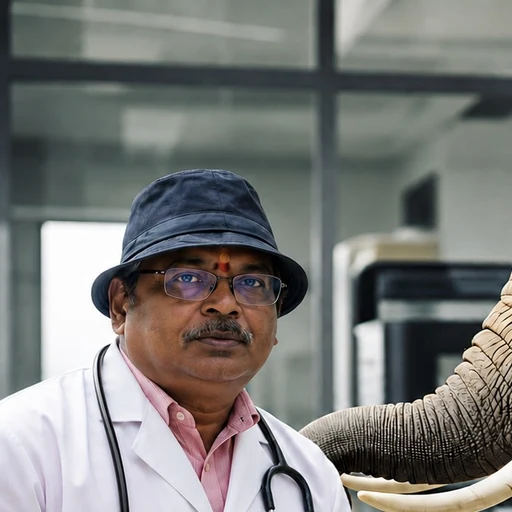
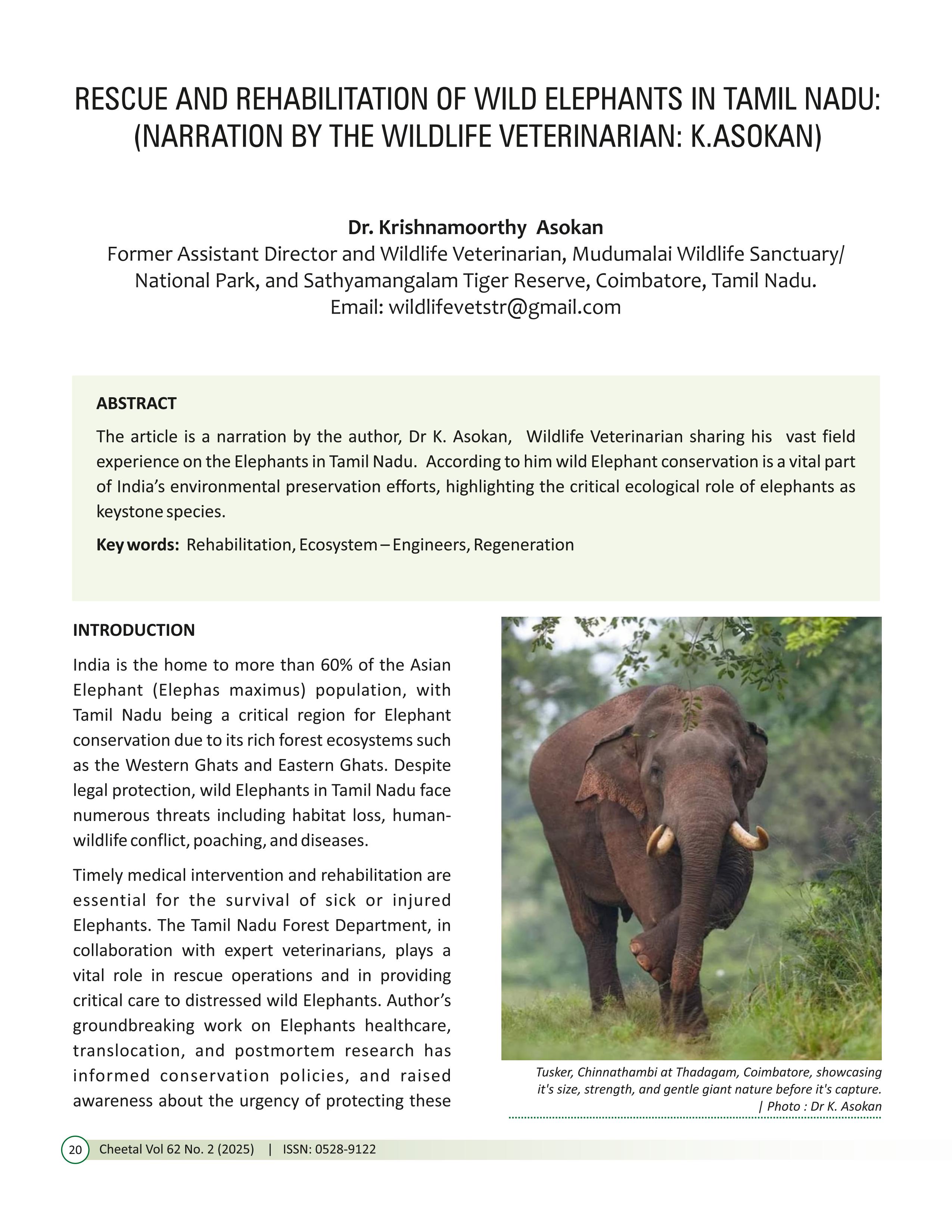
Wild Elephant Rescue and Rehabilitation in Tamil Nadu
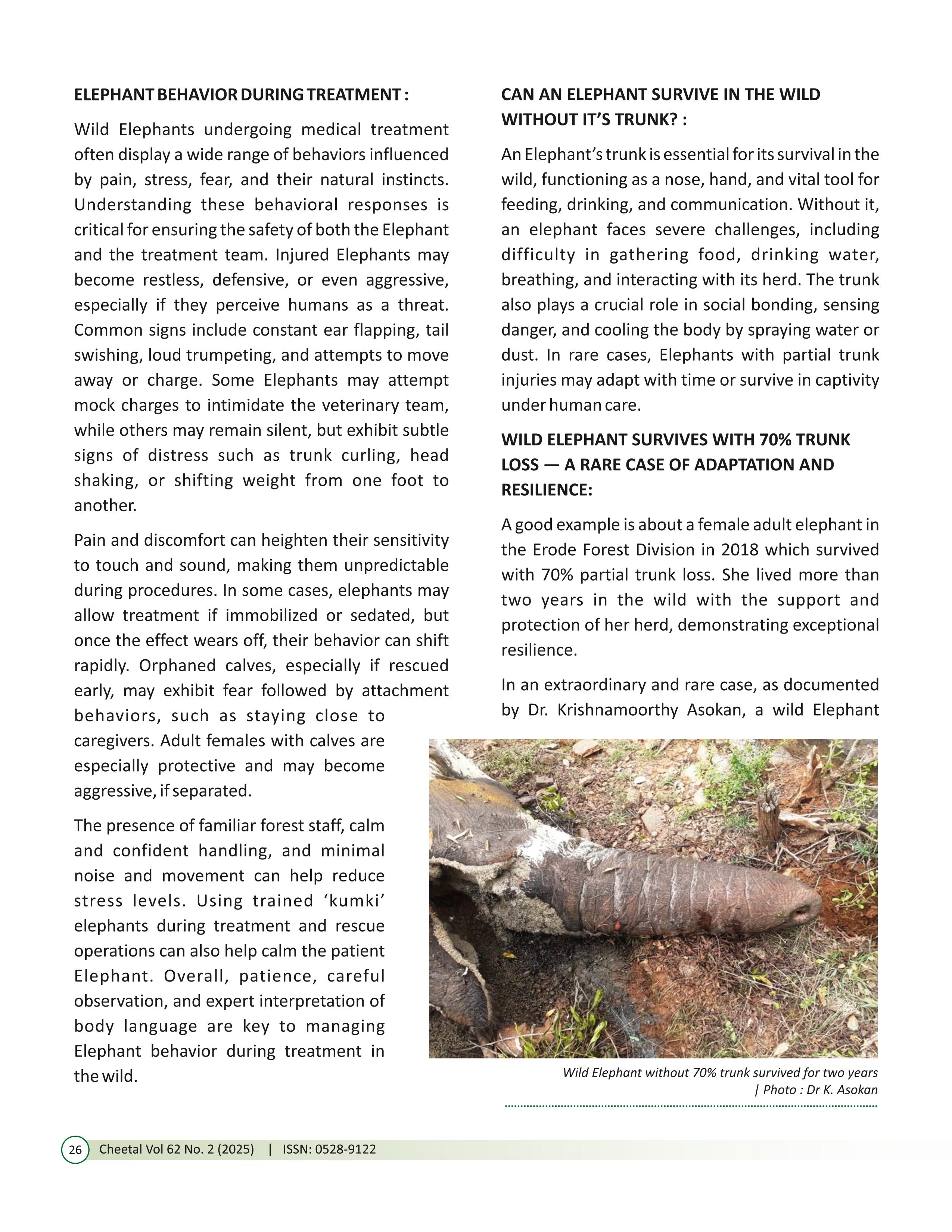
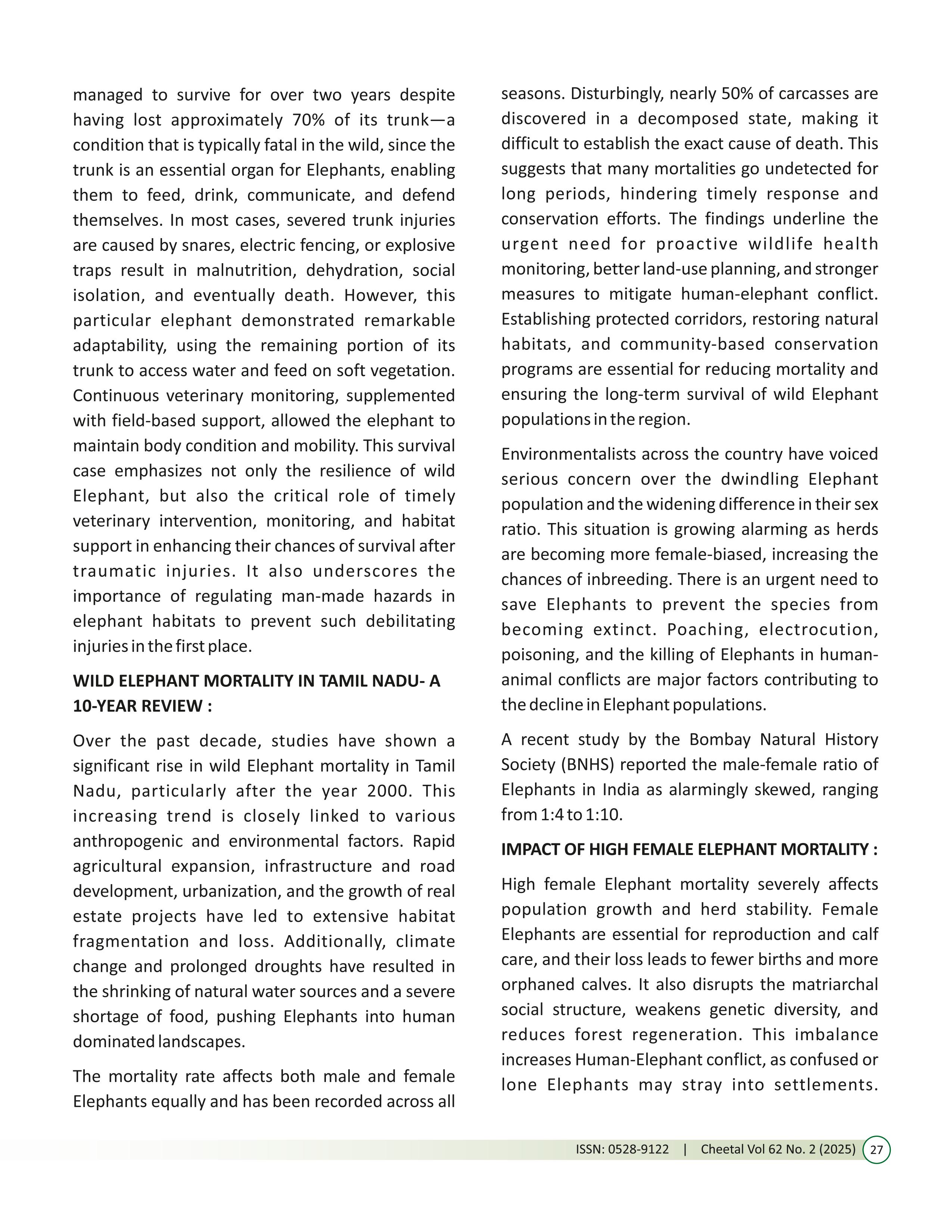
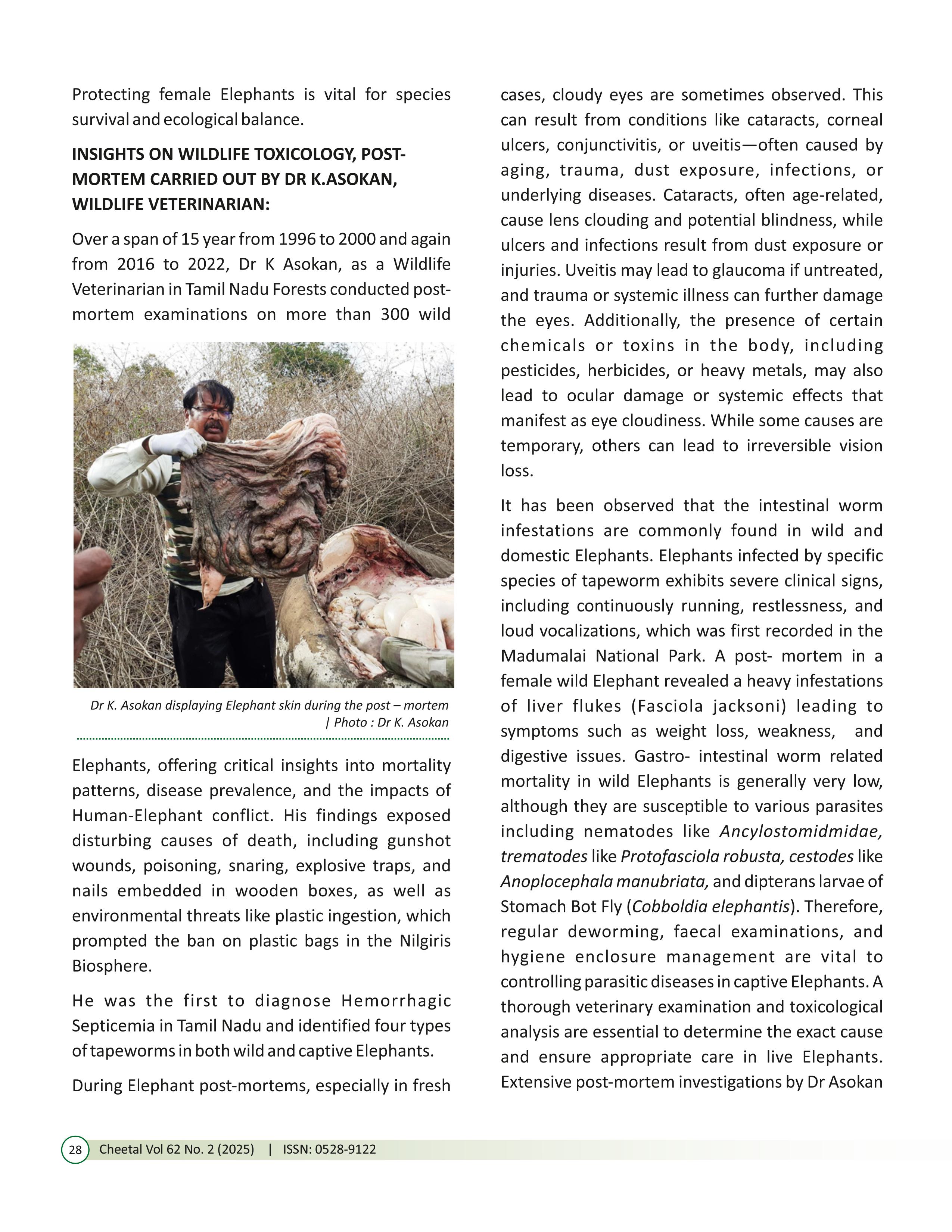
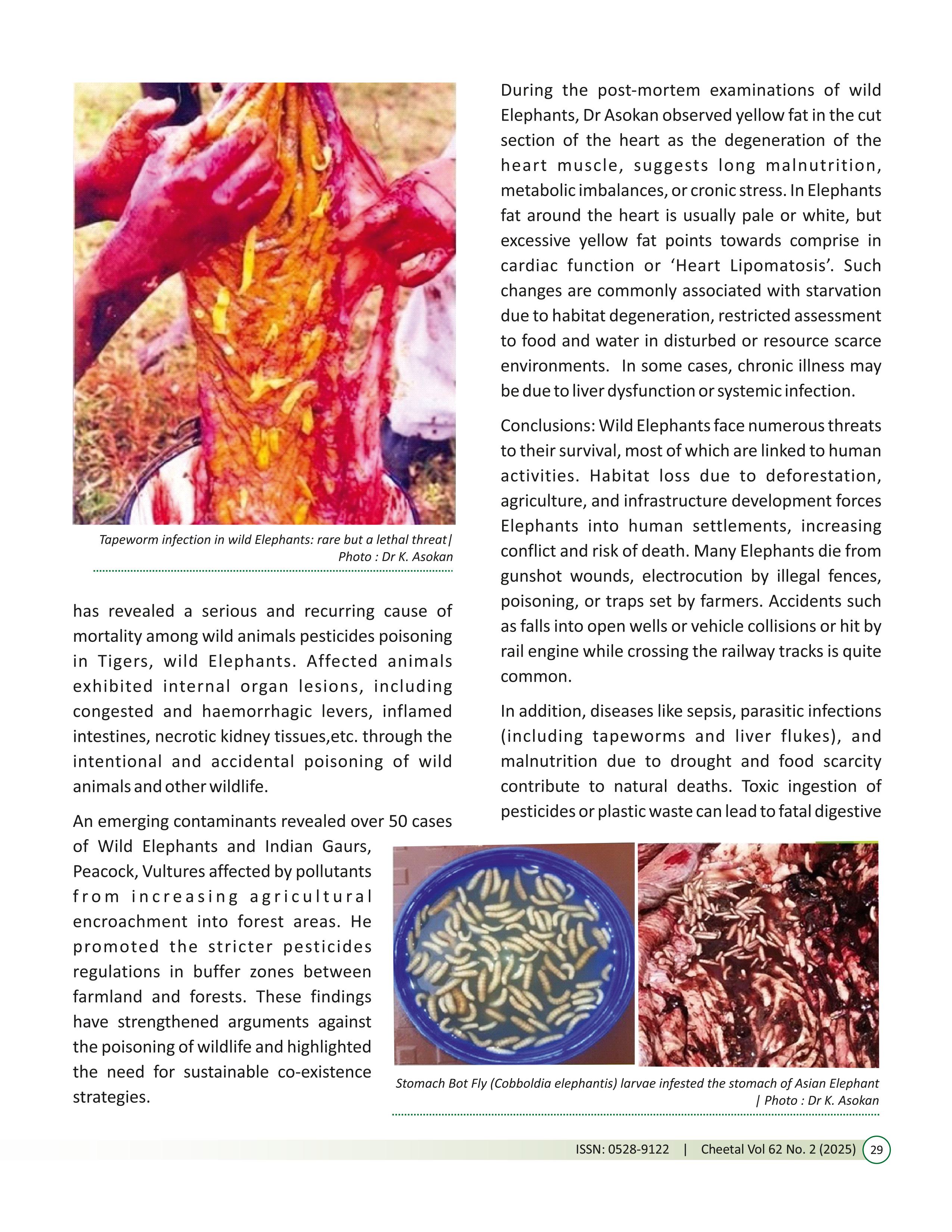
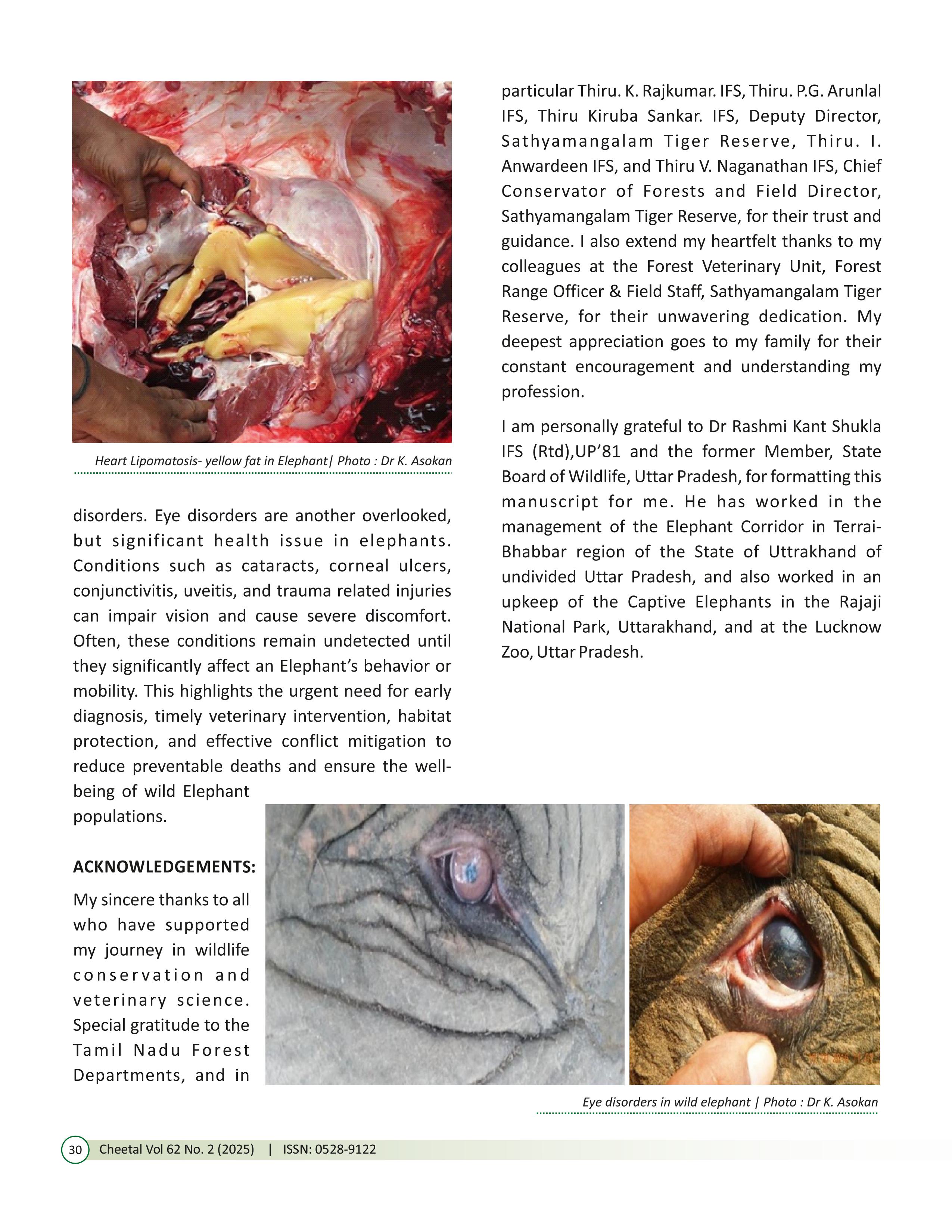
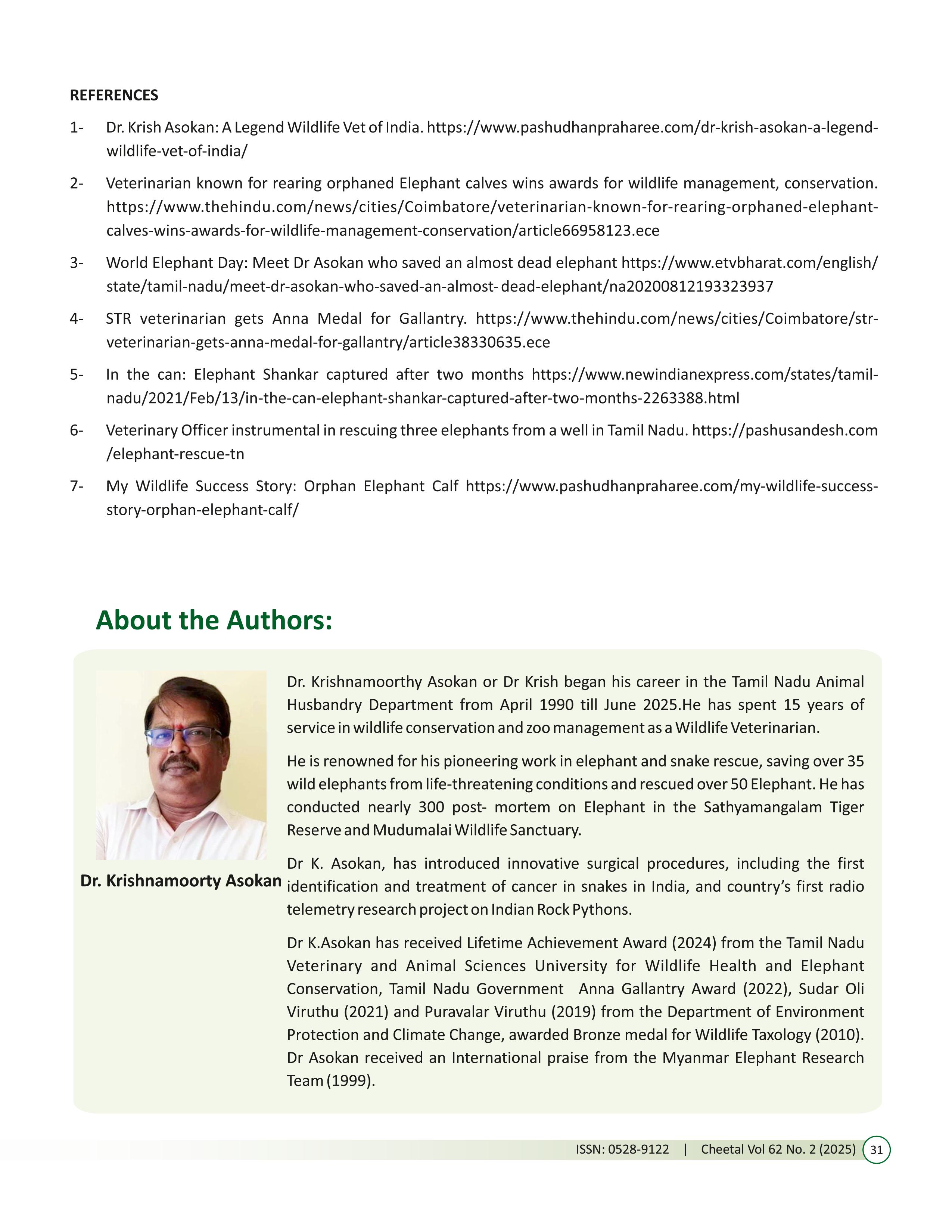
Selected scientific communication highlights
- “Threats for Snakes – An Overview” – Lead Speaker presentation, TANUVAS, Chennai, 2019.
- Indian Rock Python Research – Best Paper Presentation recognition, 2024.
- Technical guidance on safe snake rescue, clinical management, conservation, and scientific handling at state-level rescue meetings.
- Lectures and demonstrations for veterinarians, Forest Department personnel, students, rescue volunteers, and the public.
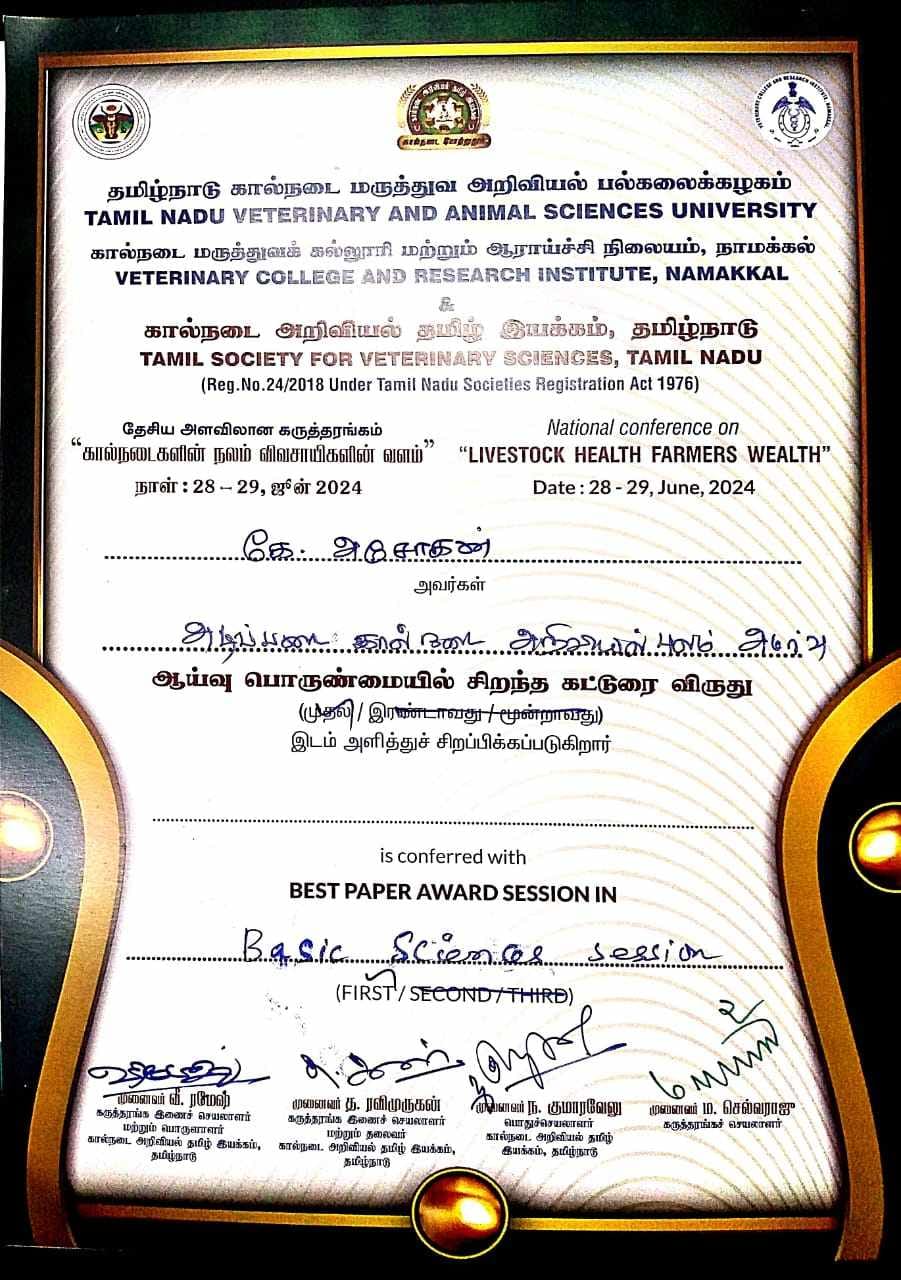
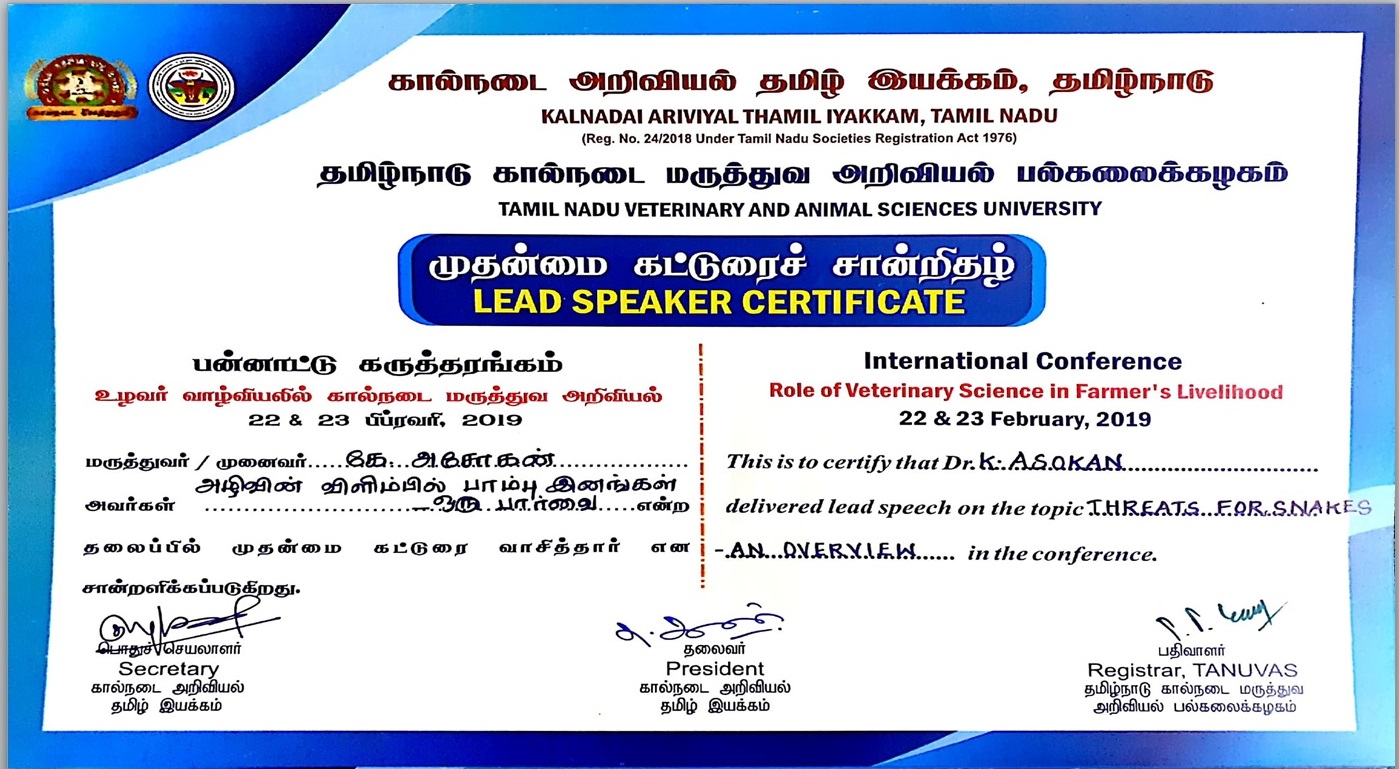
Downloadable Publications & Documents
Dr. Krish Asokan — Professional Biodata
Professional profile, experience, achievements and wildlife conservation work.
4.6 MB · Open document ↗Pesticide Poisoning in Indian Peafowl Pavo cristatus from Tamil Nadu: A Continuing Threat to India’s National Bird
As a co-author, Dr. Krishnamoorthy Asokan contributed to the wildlife investigation and scientific documentation of one of India's most important studies on pesticide poisoning in free-ranging Indian Peafowls. His expertise in wildlife veterinary medicine, field investigation, post-mortem examination, and wildlife disease diagnosis helped strengthen the evidence linking pesticide misuse to the mortality of India's National Bird. The publication adds to his body of work in wildlife health, conservation medicine, and environmental toxicology.
1.0 MB · Open document ↗TRACKING PYTHONS: INVESTIGATION ON THE SPATIO-TEMPORAL AND THERMAL ECOLOGY OF INDIAN PYTHON (PYTHON MOLURUS MOLURUS, LINN. 1758) IN MOYAR RIVER VALLEY, TAMIL NADU, INDIA -abstract
This study investigated the spatio-temporal movement and thermal ecology of the Indian Python (Python molurus molurus) in the Moyar River Valley, Tamil Nadu. Radio-telemetry, mark–recapture and temperature data loggers were used to study movement patterns, home range, habitat selection, seasonal activity and thermoregulation of free-ranging pythons. The study aimed to improve understanding of Indian python ecology and provide scientific information for species conservation, habitat management and reducing human–snake conflict.
1.8 MB · Open document ↗Homing of translocated native Indian pythons in Moyar River Valley, South India
This study investigated the homing ability of translocated native Indian pythons (Python molurus) in the Moyar River Valley, South India, using radio-telemetry during 2018–2020. Fourteen adult pythons were monitored, of which 11 were translocated at distances ranging from 0.2 to 55.7 km from their original capture sites. All pythons translocated less than 11 km moved at least 60% of the distance back towards their original locations, while none of the three pythons translocated 21–55.7 km successfully returned. The findings indicate that short- and medium-distance translocations may be ineffective for reducing human–python conflict, whereas carefully planned long-distance translocation to suitable habitat may be a more effective management strategy.
6.9 MB · Open document ↗Zoo Outreach Organisation ZOO celebrated International Vulture Awareness Day on 1 September 2012 at VOC Park Mini Zoo, Coimbatore.
Zoo Outreach Organisation ZOO celebrated International Vulture Awareness Day on 1 September 2012 at VOC Park Mini Zoo, Coimbatore.
5.2 MB · Open document ↗The Post-feeding Activity of an Indian Rock Python, Python molurus (Linnaeus 1758), in the Moyar River Valley, Southern India
This study documents the post-feeding activity and thermoregulation of an adult female Indian Rock Python (Python molurus) in the Moyar River Valley, Southern India. A radio-transmitter with an iButton temperature logger was implanted in the python, allowing continuous monitoring of body temperature following a feeding event. After consuming a large prey, presumed to be a Spotted Deer, the python remained mainly in dense vegetation and the Moyar River, while its body temperature increased markedly during digestion. Mean body temperature increased from 27.56 ± 0.16°C before feeding to 35.5 ± 1.93°C after feeding, demonstrating the importance of behavioural thermoregulation during digestion.
2.9 MB · Open document ↗Hyena Tamil Articles -Real Story
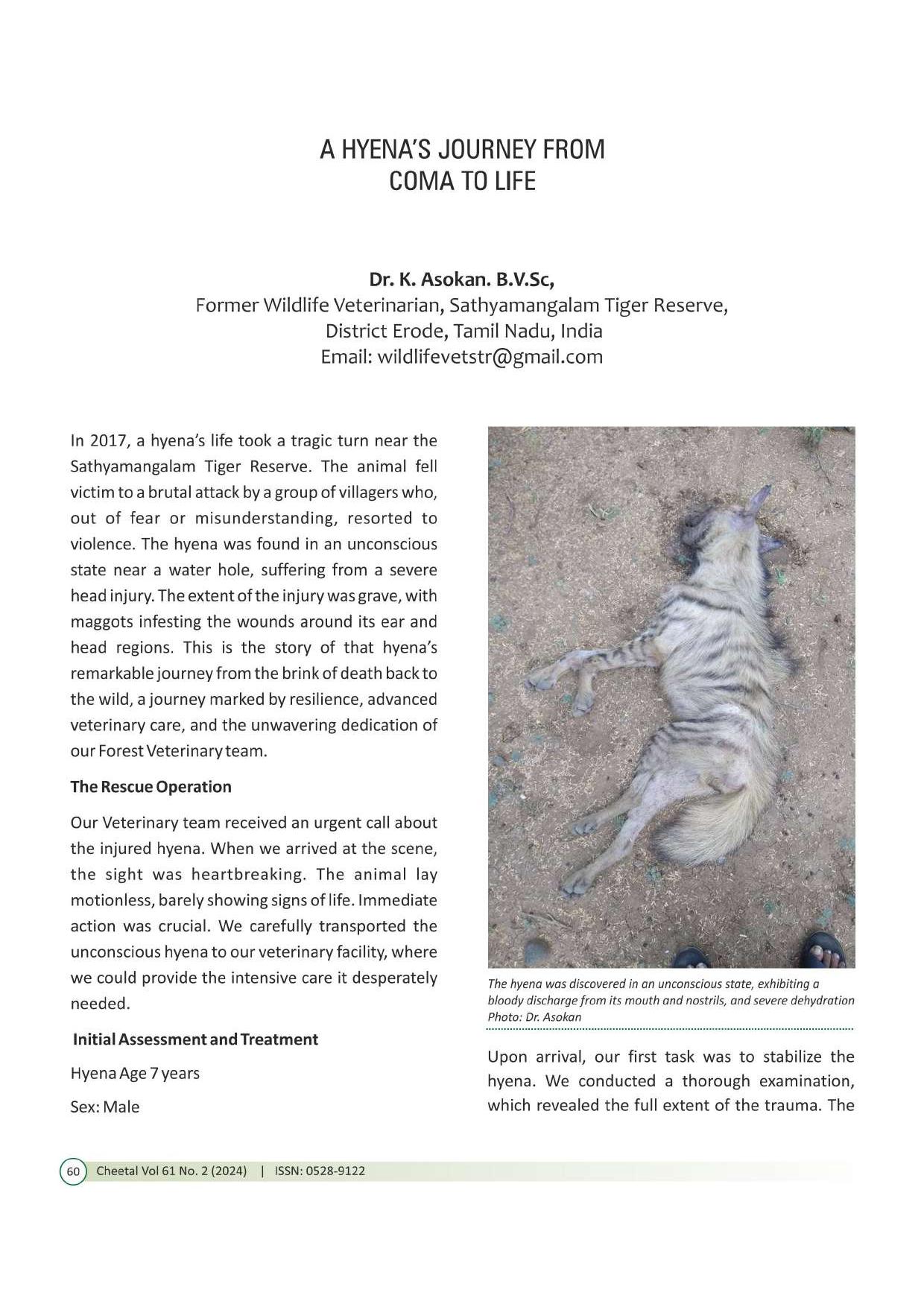
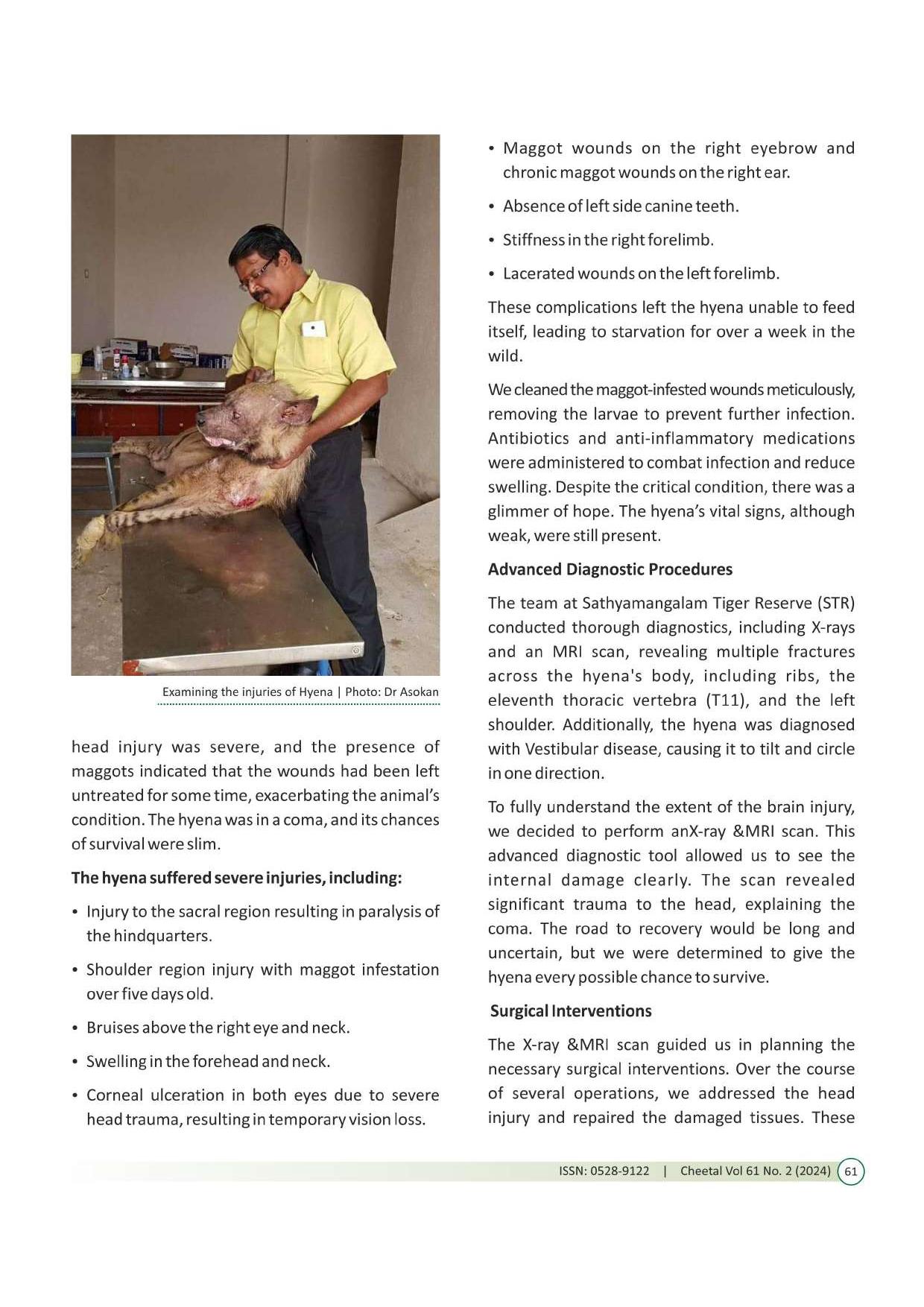
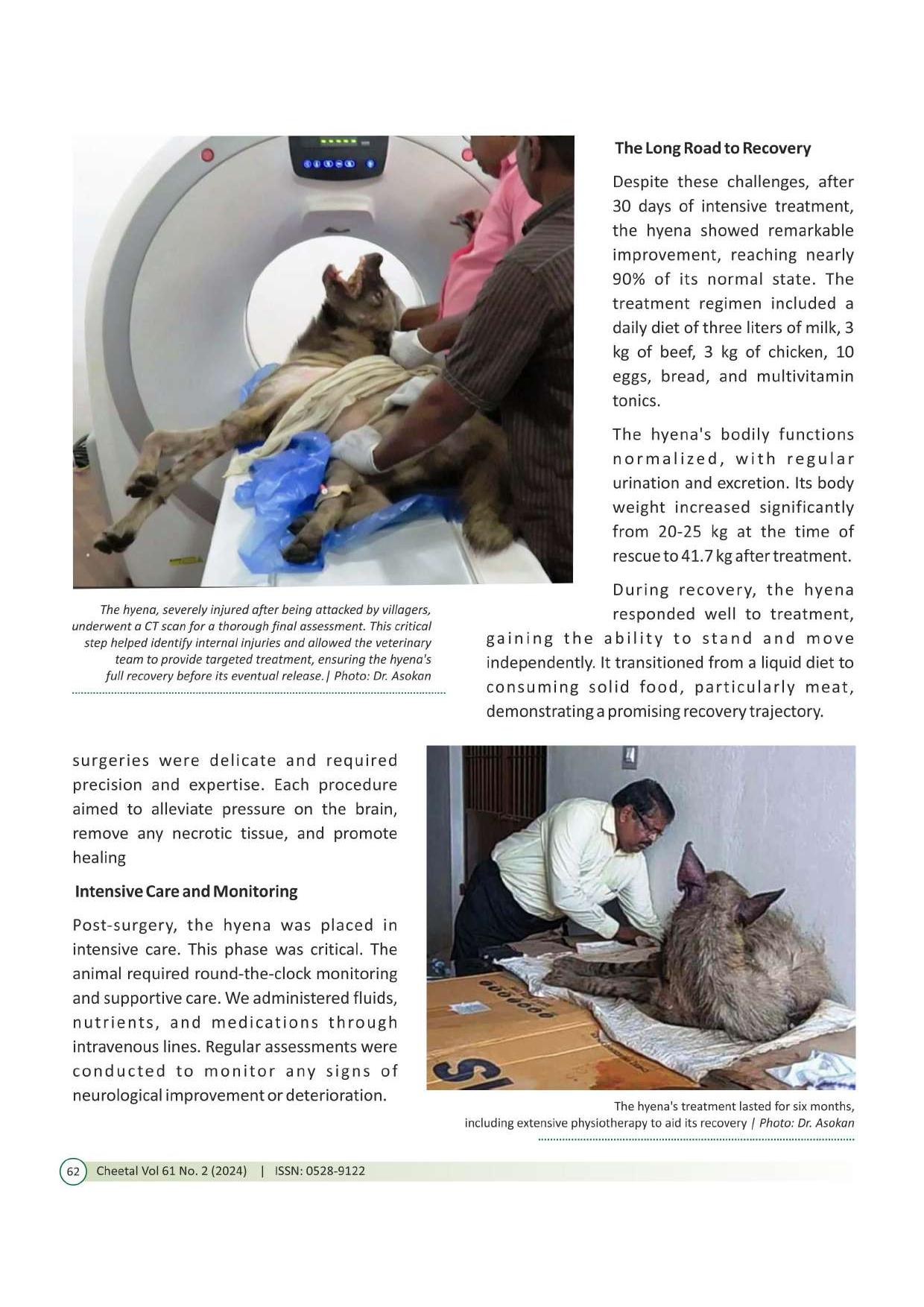
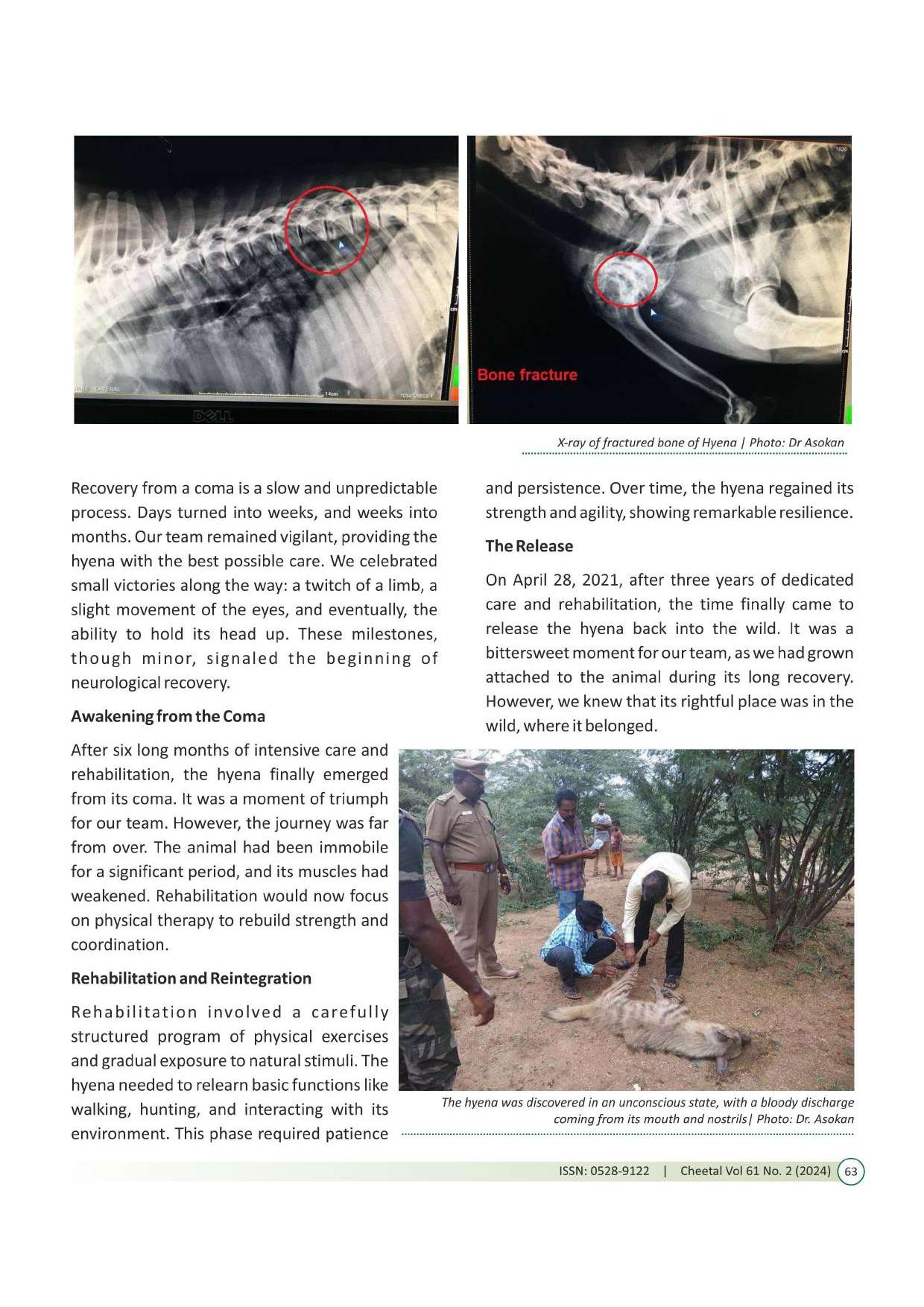
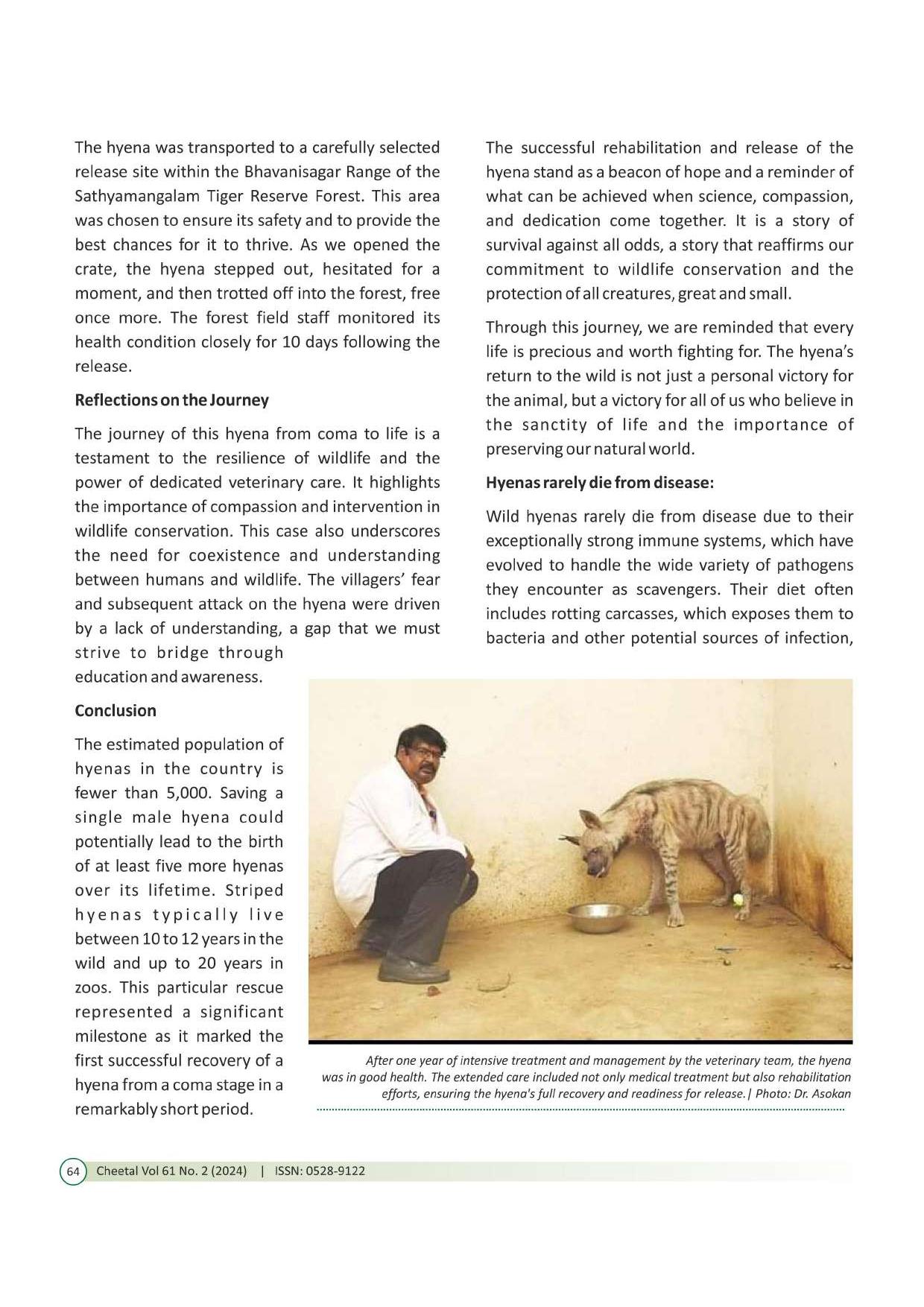
Tamil Articles by Dr. K. Asokan, Published by Environmentalist Kovai Sathasivam The remarkable rescue and recovery of a severely injured Striped Hyena (Hyaena hyaena) by Dr. K. Asokan inspired a series of Tamil articles published by noted environmental writer Kovai Sathasivam. Known for documenting real-life conservation stories, Sathasivam presented the hyena's journey as a powerful example of compassion, scientific veterinary care, and wildlife conservation. The articles narrate the true story of a male striped hyena that was brutally attacked by villagers after it strayed into a human settlement near Bhavanisagar in 2017. When the animal was rescued by the Sathyamangalam Tiger Reserve team, it was unconscious and suffering from multiple life-threatening injuries, including head trauma, fractures, shoulder dislocation, damaged eyes, and severe starvation. Under the dedicated care of Dr. K. Asokan and his veterinary team, the hyena received intensive treatment, surgery, physiotherapy, nutritional support, and continuous monitoring. Against all odds, the animal gradually recovered after remaining in a coma for several months, becoming one of India's most inspiring wildlife rehabilitation stories. Through these Tamil articles, Kovai Sathasivam highlighted not only the medical challenges involved in treating a critically injured wild carnivore but also the importance of coexistence between humans and wildlife. The stories educated readers about the ecological role of striped hyenas as natural scavengers that help maintain healthy ecosystems by removing animal carcasses and reducing the spread of disease. The publications received appreciation from wildlife enthusiasts, students, and conservationists for bringing an extraordinary wildlife rescue story to the Tamil-speaking public. They also recognized the dedication of Dr. K. Asokan, whose commitment to wildlife medicine demonstrated that scientific expertise, perseverance, and compassion can give even the
5.0 MB · Open document ↗Why Is a Postmortem Examination of Elephants Essential? – An Exclusive Interview with Dr. Asokan
In an exclusive interview published by The Indian Express Tamil on 2 August 2021, wildlife veterinarian Dr. K. Krishnamoorthy Asokan explained the importance of conducting postmortem examinations on deceased elephants to determine the exact cause of death and prevent similar incidents in the future. He highlighted the challenges of investigating deaths caused by electrocution, poisoning, diseases, parasitic infections, and injuries. He also emphasised the importance of collecting organ and tissue samples for laboratory analysis, documenting findings for scientific research, and strengthening wildlife conservation efforts. The interview reflects his extensive experience in elephant rescue, veterinary treatment, and wildlife conservation.
1.1 MB · Open document ↗ZOO celebrates 59 Wildlife Week with Coimbatore Corporation Schools
ZOO Celebrates 59th Wildlife Week with Coimbatore Corporation Schools (2013) During the 59th Wildlife Week Celebrations (October 2013), V.O.C. Park Mini Zoo, Coimbatore, under the leadership of Dr. K. Asokan, Veterinary Officer and Zoo Director (2011–2014), organized a series of wildlife education and conservation awareness programmes for Coimbatore Corporation School students. The initiative was conducted in collaboration with the Zoo Outreach Organisation (ZOO) to inspire young minds about biodiversity conservation and environmental responsibility. The week-long celebration featured: Wildlife conservation awareness sessions for school students. Interactive talks on the importance of protecting forests, wild animals, and native biodiversity. Guided educational tours of the V.O.C. Park Mini Zoo. Demonstrations on snake conservation, reptile ecology, and coexistence with wildlife. Wildlife quizzes, drawing competitions, and student participation activities. Distribution of educational materials promoting biodiversity conservation and responsible environmental practices. Under Dr. Asokan's guidance, the Mini Zoo became an important centre for conservation education, encouraging students to appreciate wildlife through direct observation and scientific learning. The programme strengthened the connection between urban school children and nature, helping cultivate future conservation ambassadors. The 59th Wildlife Week celebration highlighted the shared commitment of V.O.C. Park Mini Zoo, Coimbatore Corporation Schools, and the Zoo Outreach Organisation to promote wildlife conservation through education, awareness, and community participation.
1.1 MB · Open document ↗ZOO observes Golden Jubilee of Animal Welfare Fortnightly with Coimbatore schools and their students
As part of the **Golden Jubilee celebrations of Animal Welfare Fortnightly**, the **VOC Park Mini Zoo, Coimbatore**, under the leadership of **Dr. K. Asokan**, Zoo Director (2011–2014), organized a series of educational and conservation awareness programmes for students from Coimbatore Corporation Schools. The initiative aimed to instill compassion for animals, promote wildlife conservation, and encourage responsible environmental stewardship among young learners. Hundreds of school students actively participated in interactive sessions on wildlife conservation, animal welfare, biodiversity, and the importance of protecting native species. Guided zoo tours introduced children to the biology, behaviour, and conservation status of various mammals, birds, and reptiles. Special demonstrations highlighted the role of zoos in conservation, rescue, rehabilitation, and environmental education. ([Zoo Outreach Organisation][1]) Dr. K. Asokan emphasized that educating children is one of the most effective ways to build a society that respects and protects wildlife. Through engaging talks, question-and-answer sessions, and conservation activities, students were encouraged to become ambassadors for animal welfare in their homes and communities. The programme also strengthened collaboration between the zoo, schools, and conservation organizations, making the Golden Jubilee celebration a memorable milestone in wildlife education and public awareness.
1.6 MB · Open document ↗Zoo Outreach Organization and VOC Park Mini Zoo commemorates World Wetlands Day
The Zoo Outreach Organization (ZOO) in association with V.O.C. Park Mini Zoo, Coimbatore, commemorated **World Wetlands Day** by organizing an environmental awareness programme to highlight the ecological importance of wetlands and the need for their conservation. The programme aimed to educate students and the public about the vital role wetlands play in maintaining biodiversity, conserving water resources, mitigating floods, recharging groundwater, and providing habitat for numerous species of birds, reptiles, amphibians, fish, and other wildlife. Participants were also made aware of the growing threats to wetlands due to pollution, encroachment, climate change, and unsustainable human activities. As part of the celebration, interactive awareness sessions, wildlife education activities, and discussions on wetland ecosystems were conducted. Students actively participated in the programme and pledged to protect wetlands and promote environmental conservation in their communities. Speaking on the occasion, **Dr. K. Asokan, Zoo Director**, emphasized that wetlands are among the world's most productive ecosystems and are essential for sustaining biodiversity and human well-being. He encouraged young people to become ambassadors for wetland conservation by adopting environmentally responsible practices and spreading awareness about the importance of protecting natural habitats. The programme concluded with a vote of thanks, reaffirming the commitment of the Zoo Outreach Organization and V.O.C. Park Mini Zoo towards wildlife conservation, environmental education, and the preservation of wetlands for future generations.
1.5 MB · Open document ↗Bare-bellied or Madras Hedgehog, Paraechinus nudiventris, (Horsfield 1851) in Coimbatore, Tamil Nadu
**Record of the Bare-bellied (Madras) Hedgehog (*Paraechinus nudiventris*) in Coimbatore, Tamil Nadu** The **Bare-bellied or Madras Hedgehog (*Paraechinus nudiventris*)**, first described by **Horsfield (1851)**, is one of India's rarest and least-studied small mammals. Endemic to southern India, this nocturnal insectivorous species is primarily associated with dry scrub forests, thorn forests, and open grasslands. Habitat loss, agricultural expansion, road mortality, and increasing urbanization have contributed to its declining populations, making sightings relatively uncommon. A noteworthy record of the Bare-bellied Hedgehog was documented in **Coimbatore, Tamil Nadu**, highlighting the ecological significance of the region's remaining natural habitats. The observation emphasizes the importance of conserving scrubland ecosystems, which support several endemic and threatened wildlife species. The species plays a valuable ecological role by feeding on insects, termites, beetles, worms, and other invertebrates, thereby helping to maintain ecological balance and naturally control pest populations. Due to its nocturnal habits and elusive nature, it is seldom encountered, and every confirmed record contributes valuable information on its distribution and conservation status. Speaking on the significance of the record, **Dr. K. Asokan, Zoo Director**, emphasized that protecting fragmented scrub forests and promoting public awareness are essential for the long-term survival of the Bare-bellied Hedgehog. He encouraged the public to report sightings to the Forest Department and avoid disturbing or harming these harmless, beneficial mammals. The documentation of *Paraechinus nudiventris* in Coimbatore contributes to the understanding of the species' distribution in Tamil Nadu and reinforces the need for continued wildlife monitoring, habitat conservation, and public participation in protecting India's unique biodiversity.
229.3 KB · Open document ↗Red Sand Boa Eryx johnii johnii (Russel, 1801) breeds at VOC Park Mini Zoo, Coimbatore, Tamil Nadu
**Red Sand Boa (*Eryx johnii johnii*) (Russell, 1801) Successfully Breeds at V.O.C. Park Mini Zoo, Coimbatore, Tamil Nadu** The **Red Sand Boa (*Eryx johnii johnii*) (Russell, 1801)**, one of India's most fascinating non-venomous snakes, successfully bred at **V.O.C. Park Mini Zoo, Coimbatore, Tamil Nadu**, marking a significant achievement in the captive management and conservation of native reptiles. The Red Sand Boa is a fossorial (burrowing) species widely distributed across the Indian subcontinent, inhabiting dry scrublands, sandy plains, agricultural fields, and open forests. It is a slow-moving, nocturnal snake that feeds mainly on rodents, lizards, birds, and small mammals, thereby playing an important ecological role in controlling pest populations. Although harmless to humans, the species is frequently threatened by illegal collection for the wildlife trade and habitat degradation. At V.O.C. Park Mini Zoo, careful enclosure management, species-specific husbandry, appropriate nutrition, and close veterinary supervision created favourable conditions for successful breeding. The birth of healthy young boas demonstrated the zoo's capability in maintaining and propagating indigenous reptile species under captive conditions. Speaking on the occasion, **Dr. K. Asokan, Zoo Director**, stated that the successful breeding of the Red Sand Boa represents an important milestone in reptile conservation and environmental education. He emphasized that captive breeding programmes not only enhance scientific understanding of the species' reproductive biology but also strengthen conservation awareness among visitors and support future conservation initiatives. The successful breeding of *Eryx johnii johnii* at V.O.C. Park Mini Zoo highlights the importance of scientific zoo management, wildlife veterinary care, and conservation breeding programmes in safeguarding India's native reptile diversity for future generations.
283.0 KB · Open document ↗CBSG South Asia and Zoo Outreach Organization joins “Wild Face of Climate Change” -350.org climate change movement
**CBSG South Asia and Zoo Outreach Organization Join the “Wild Face of Climate Change” – 350.org Global Climate Movement** During **2011–2014**, **CBSG South Asia (Conservation Breeding Specialist Group – South Asia)** and the **Zoo Outreach Organization (ZOO)** joined the global **“Wild Face of Climate Change”** campaign initiated by **350.org** to raise awareness about the impacts of climate change on wildlife and biodiversity. The campaign was actively supported at **V.O.C. Park Mini Zoo, Coimbatore**, under the leadership of **Dr. K. Asokan, Zoo Director**. The programme highlighted how climate change threatens wildlife through rising temperatures, altered rainfall patterns, habitat degradation, forest fires, droughts, floods, and changing ecosystems. Educational activities emphasized the vulnerability of endangered species and the urgent need to reduce carbon emissions while protecting natural habitats. As part of the campaign, school and college students, teachers, nature enthusiasts, and zoo visitors participated in climate awareness programmes, interactive discussions, exhibitions, and conservation pledges. The events encouraged participants to adopt environmentally responsible practices such as conserving water, planting native trees, reducing plastic use, saving energy, and lowering their carbon footprint. Addressing the gathering, **Dr. K. Asokan, Zoo Director**, stressed that wildlife is one of the earliest indicators of climate change and that protecting biodiversity is essential for maintaining healthy ecosystems. He emphasized that zoos have an important role not only in conserving endangered species but also in educating the public about global environmental challenges and inspiring positive action. The participation of CBSG South Asia and the Zoo Outreach Organization in the **“Wild Face of Climate Change”** movement strengthened environmental education efforts in Tamil Nadu and reinforced the message that conserving wildlife, restori
728.6 KB · Open document ↗In the can: Elephant Shankar captured after two months The two-month operation by Forest department to capture elephant Shankar bore fruit on Friday with o cials capturing the 20-year-old wild tusker near Gudalur in the Nilgiris.
Elephant Shankar was a 20-year-old wild tusker involved in serious human–elephant conflict near Gudalur, Nilgiris. After a two-month Forest Department operation, Shankar was successfully captured near Cherampadi. A veterinary team led by K. Asokan, Forest Veterinary Officer, Sathyamangalam Tiger Reserve, along with other veterinarians, used tranquilizer darts to safely immobilize the elephant. Four Kumki elephants—Kalim, Sujai, Vijai and Srinivas—were involved in the operation. Shankar was reported to be in good health and was subsequently prepared for shifting to the Kraal at Theppakadu Elephant Camp, Mudumalai Tiger Reserve. The successful operation demonstrated the importance of coordinated veterinary, forest and Kumki-elephant teams in managing conflict elephants.
6.1 MB · Open document ↗**"Snake Surgeon of Tamil Nadu" – Tamil Feature Article on Dr. K. Asokan Published in *Vivasaye* Tamil Agriculture Journal**
The **Tamil agriculture magazine *Vivasaye*** published a special feature highlighting the pioneering wildlife veterinary contributions of **Dr. K. Asokan**, recognizing him as the **"Snake Surgeon of Tamil Nadu."** The article showcased his remarkable work in snake rescue, veterinary surgery, rehabilitation, research, and public education, bringing the importance of snake conservation to farmers and rural communities. The magazine focuses on agriculture and rural awareness, making it an ideal platform to educate readers about the ecological value of snakes. The feature described Dr. Asokan's successful treatment of numerous injured snakes, including cobras, Russell's vipers, Indian rock pythons, rat snakes, and other native species. It highlighted his innovative surgical procedures for traumatic injuries, abscesses, tumors, eye disorders, spinal injuries, and fish-hook removal, demonstrating that reptiles can be treated successfully using modern veterinary techniques. The article also emphasized Dr. Asokan's pioneering conservation initiatives, including the artificial incubation of snake eggs, captive breeding of indigenous reptiles, and India's first radio-telemetry research on Indian Rock Pythons in Tamil Nadu. His work helped improve scientific understanding of snake ecology while promoting coexistence between humans and snakes. Written for the farming community, the article explained the ecological importance of snakes as natural controllers of rodents that damage crops and stored grains. It encouraged farmers to protect non-venomous snakes, avoid indiscriminate killing of reptiles, and seek assistance from trained snake rescuers and the Forest Department whenever snakes are encountered. The publication recognized Dr. Asokan's dedication to wildlife conservation, veterinary innovation, and environmental education, portraying him as a leading wildlife veterinarian whose work has significantly contributed to snake conservation and public awareness in Tamil
5.4 MB · Open document ↗The story of a wildlife veterinarian Dr.Ashokan who guards wild animals _ Doctor Ashokan _ காட்டு விலங்குகளின் காவலன், வன கால்நடை மருத்துவர் அசோகனின் நெகிழ்ச்சி கதை..!
The title you shared is from an ABP Live Tamil feature on Dr. Asokan, published on January 26, 2022. The article highlights his wildlife veterinary service, including elephant rescue and treatment, snake surgery, python research, and care for more than 500 wild animals. Dr. Krishnamoorthy Asokan is a dedicated wildlife veterinarian whose career reflects a deep commitment to protecting wild animals. From treating critically injured elephants and rescuing orphaned calves to performing challenging snake surgeries and conducting wildlife research, his work has combined veterinary science, courage, compassion and conservation. His service at Mudumalai during 1996–2000 marked an important period in his wildlife career, followed by extensive work in elephant conservation, snake research and human–wildlife conflict mitigation. His story demonstrates that wildlife conservation is not only about protecting forests—it is also about saving individual animals, generating scientific knowledge and inspiring society to coexist with wildlife.
5.6 MB · Open document ↗